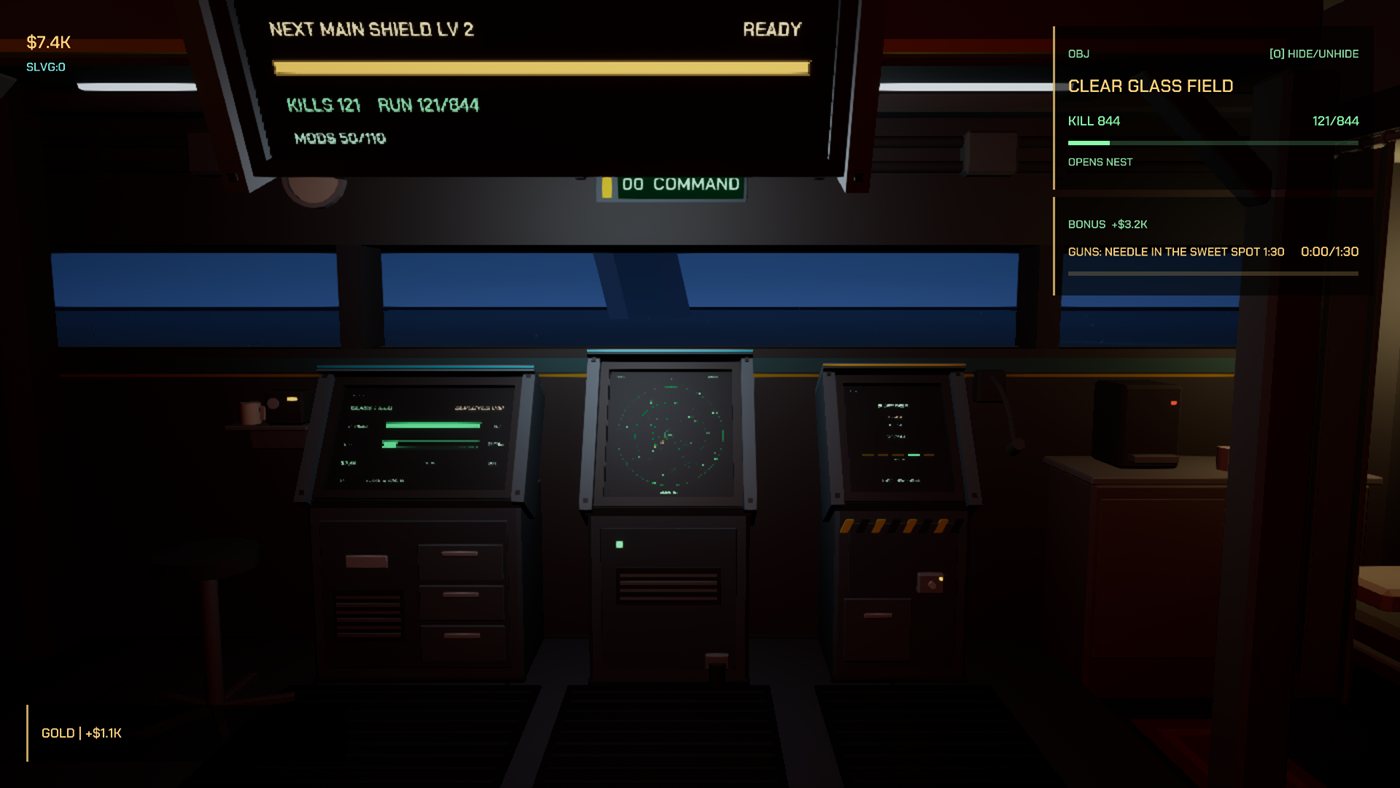
A first-person performant, iterative idle game about keeping a defense bunker on a bug planet. Deploy into the swarm and kill bugs to grow stronger.
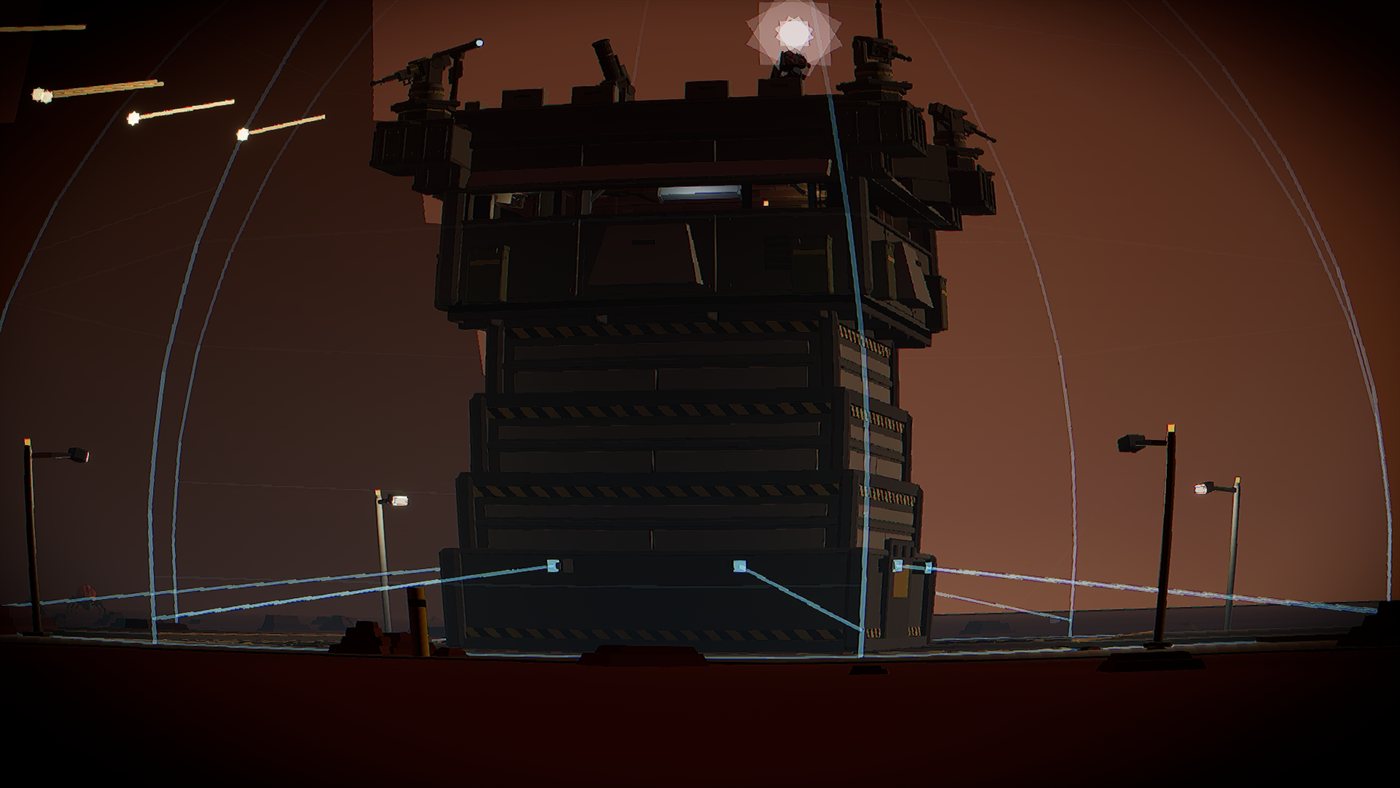
Idle games pay you for leaving and first-person games pay you for being there. Most attempts at both pick one: either the idle layer is a spreadsheet bolted to a world nobody walks through, or the world is real and requires 100% attention to progress. I wanted a place worth standing in that never requires you to stand in it, in a performant way. This challenged the way I model and build things in Unreal.
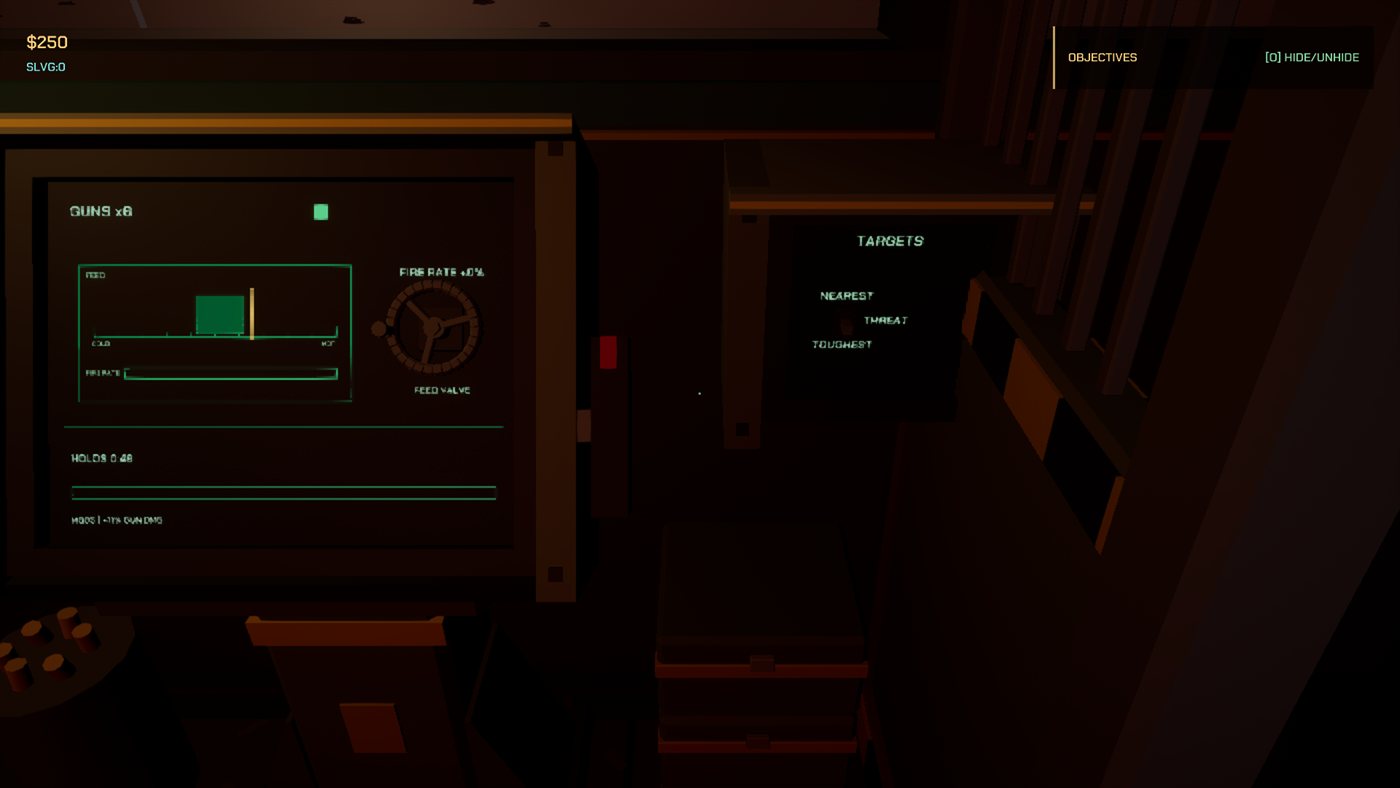
The bunker is always competent and never optimal. Every station on its floor is a job the automation already does at a baseline and a player does better. Attention is a multiplier, not a requirement, so being there is rewarded without absence being penalised. Since my very first game, making micro games that require attention has been something I enjoy. This is my best version of that.
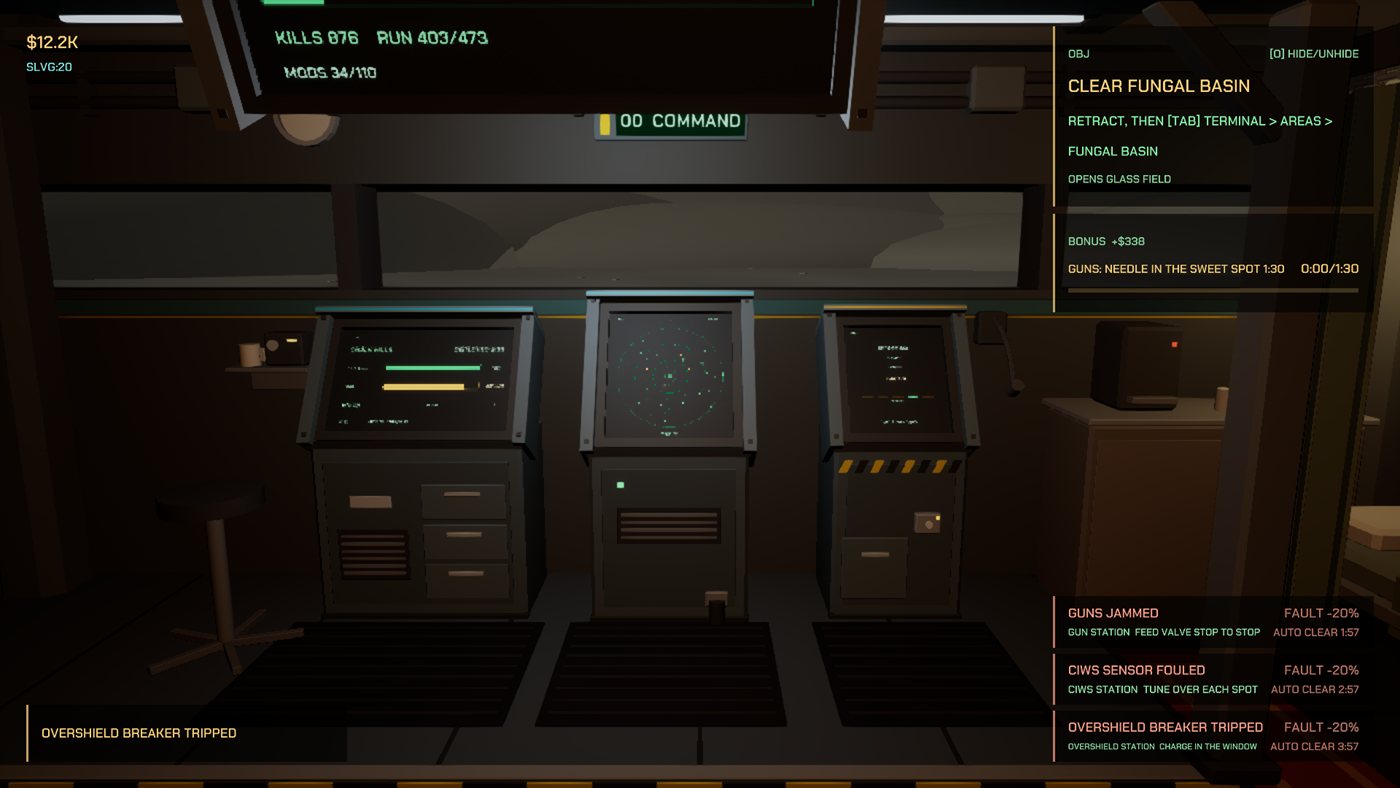
Faults test the same rule. Now and then a station jams, fouls or trips and loses a fifth of its strength until it is cleared by its own small game, or clears itself a few minutes later. Every system was made a quarter stronger when faults came in, so a bunker whose faults are never touched is exactly as strong as it was before: clearing one is all upside, never a tax on leaving.
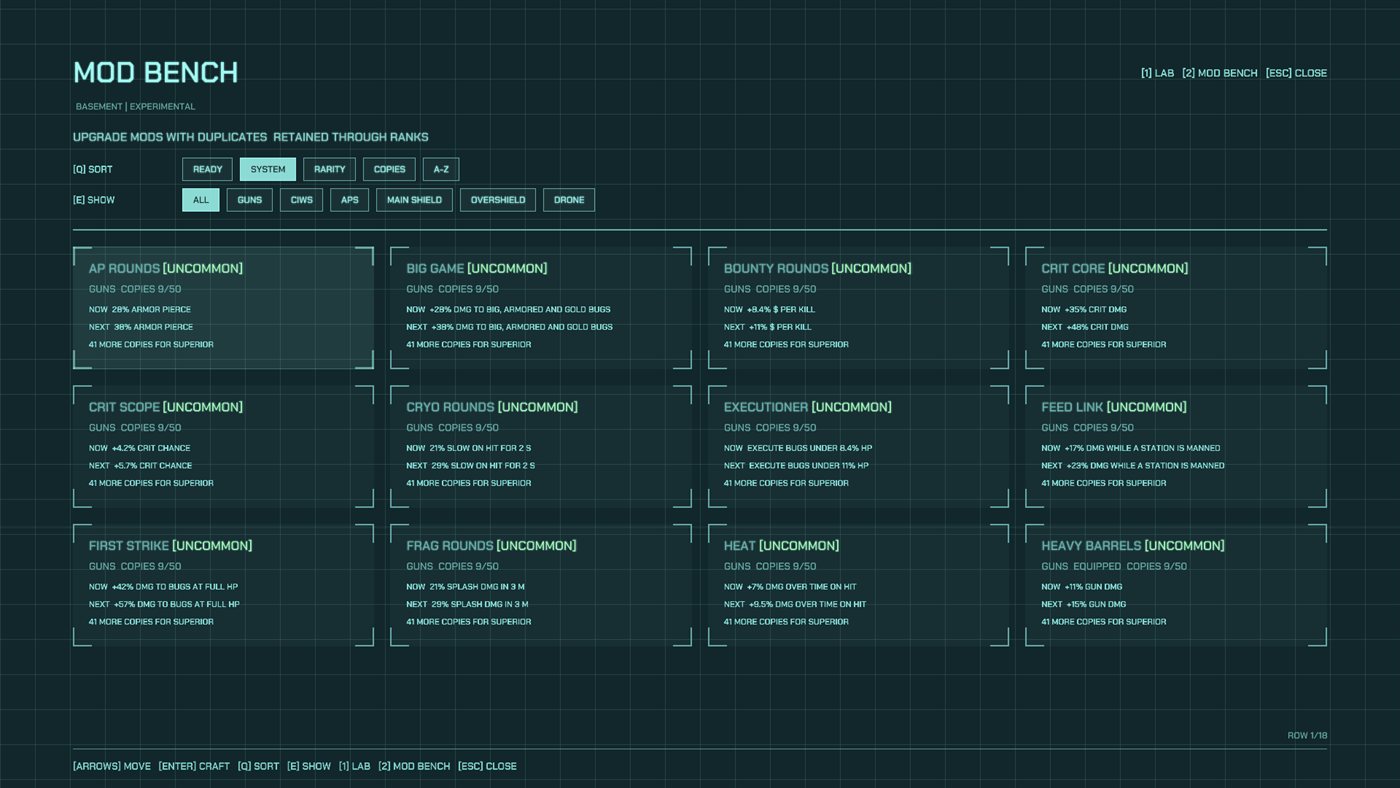
Progression carries the same idea instead of fighting it. Seven areas each ask something different of the bunker, and clearing one opens the next. Specialties trade a buff for a nerf: HANDS ON hits harder while the stations are worked and softer while they are not, HANDS OFF the other way round, so how present you want to be becomes a build rather than a guilt mechanic. Underneath sit the depth: 110 mods crafted up from copies, a tier ladder for every kind of bug, research that runs in real time, and ranks that start the planet over harder while keeping all of it. I really like games that have a 'grind', and while this doesn't scratch the itch entirely I am learning how to build out rewarding grindable systems.
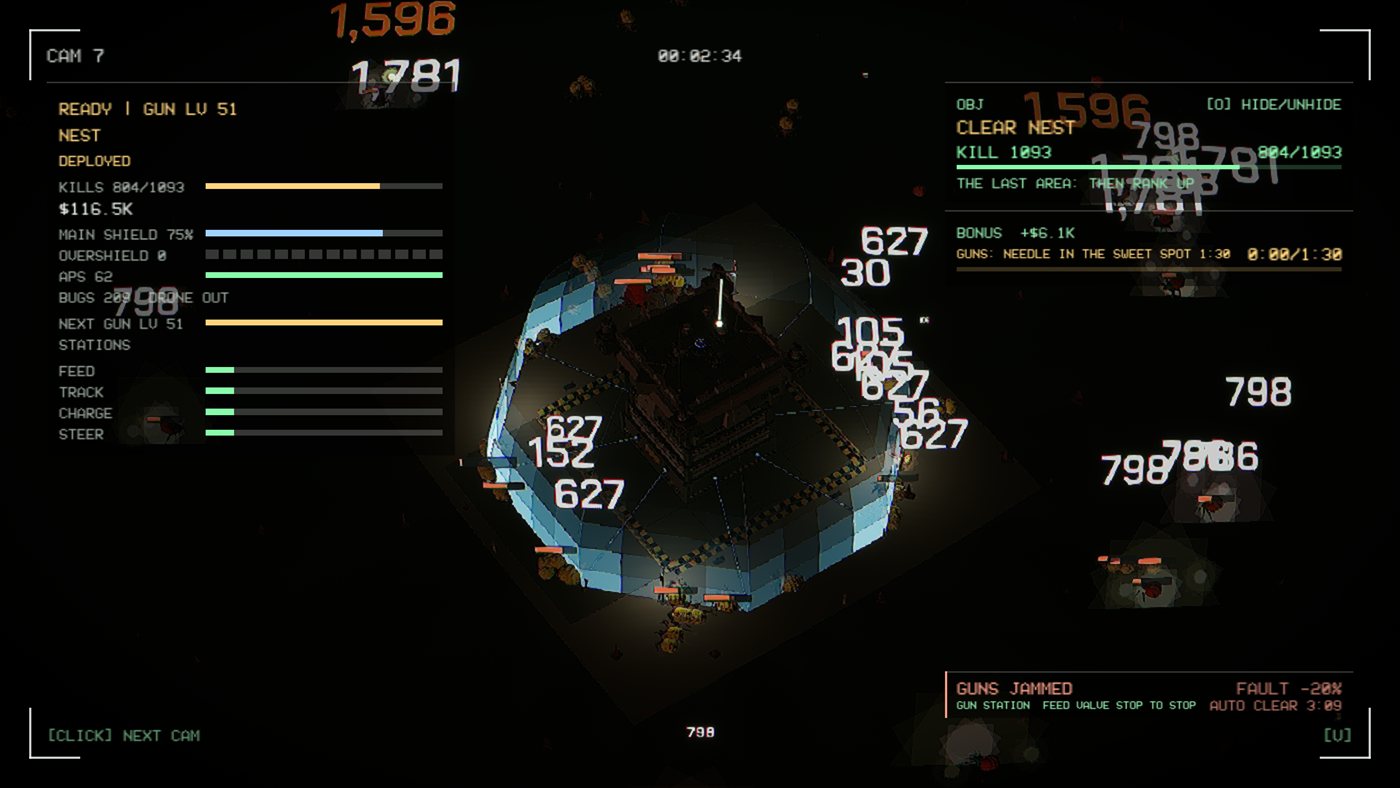
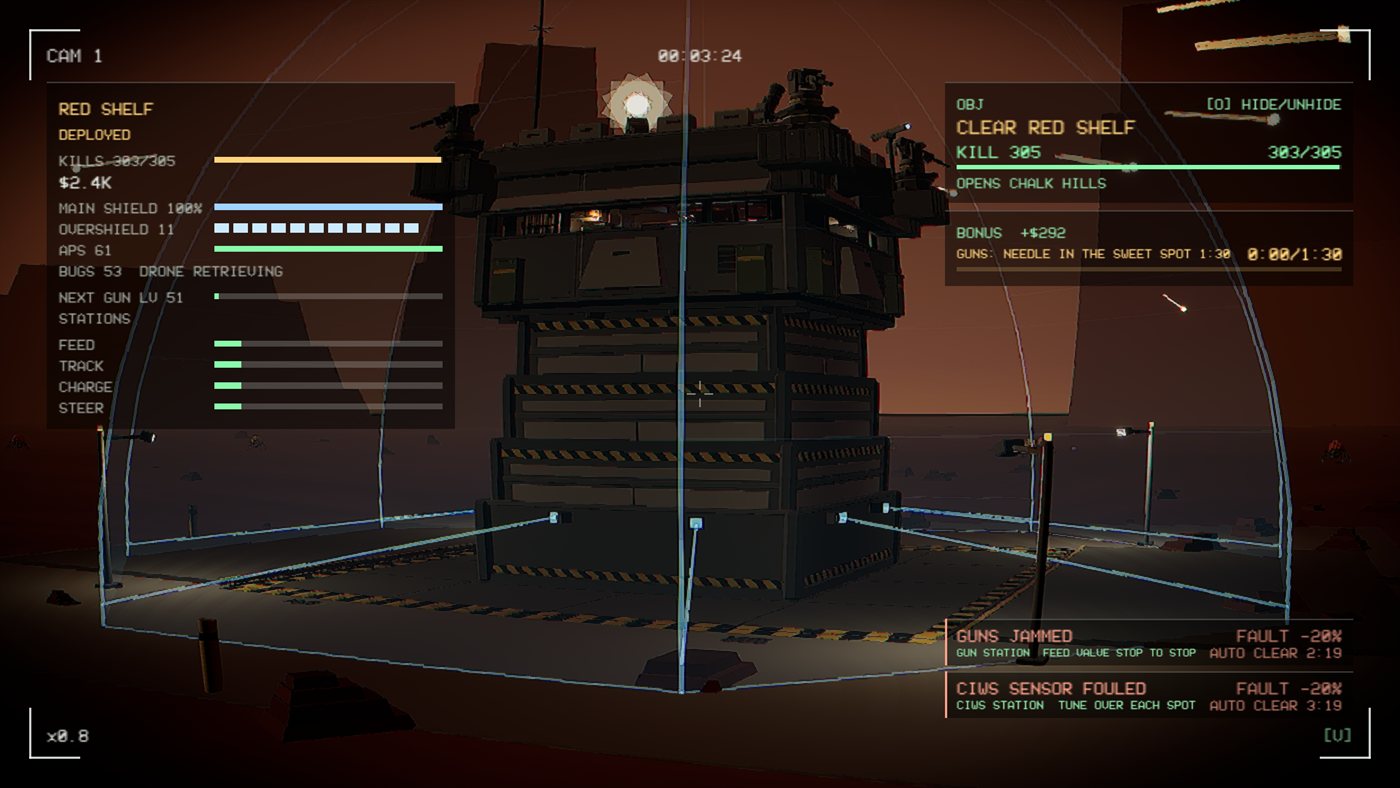
By the second playtest the game had bunker frames in three lines, layouts, trained skills, supply crates, raids, a passive watch and progress while away. Played, it felt like a pile of ideas rather than one design. I cut it down to one loop (deploy, kill, clear, rank up), two currencies and one drone, and kept depth only where it served that loop. The mods, the HUNT tiers, the lab. Then I cut progress while away entirely. With a loop that short, a session is the unit, and the game already runs itself in a small window in the corner while you do something else.
The progression is simple deterministic math.
Performance was a design constraint/goal from the start, because an idle game is one you leave running. Each kind of bug is a single instanced mesh with its walk baked into it, so a kind is one draw however many there are, and the rules step every bug twenty times a second without ever comparing each bug to every other. In a stress test, four thousand bugs cost under a millisecond a frame over an empty field.
My least favorite part of game dev is the Blender to Unreal pipeline; this game uses my model-code-model pipeline to bypass that entirely, which quite literally saved weeks of dev time.