A deckbuilding roguelike where cards are assembled into a queue and executed as one sequence, resolving left to right with combo bonuses accumulating across the queue.
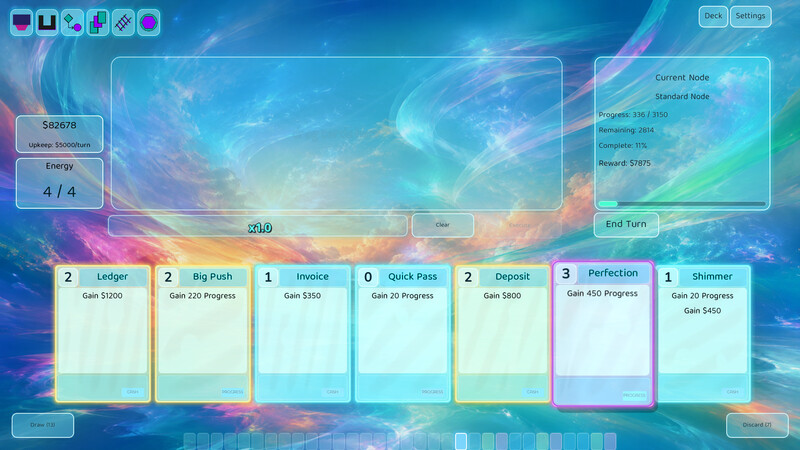
Most deckbuilders resolve a card the instant you play it. A turn becomes a series of small independent choices, and the order you make them in rarely matters beyond a couple of obvious combos. The interesting decision, sequencing, is usually an accident of the rules rather than the point of them.
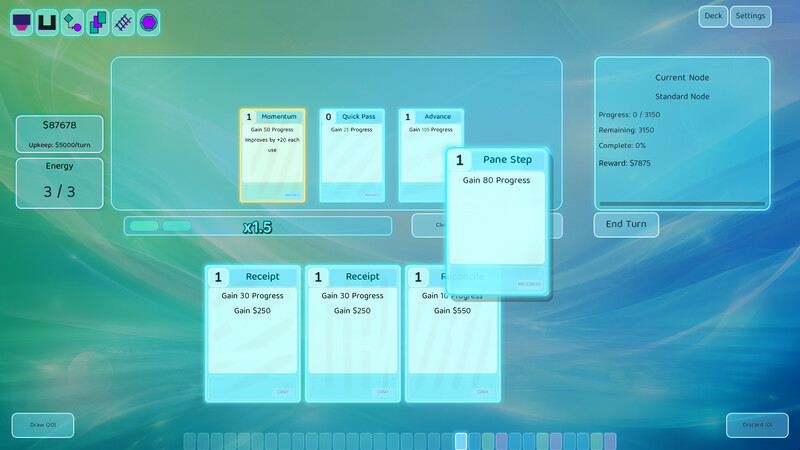
Make the queue the unit of play instead of the card. You build the whole sequence first, then execute it, and bonuses accumulate as it resolves, so position is worth as much as contents. Selection stops being the decision and arrangement starts being it. Glass cards extend the queue and carry placement rules of their own, which is where most of the depth ends up living.
I am proud of the presentation and the Godot development skills I developed. Glass Hand has a high ceiling for how far it could go.
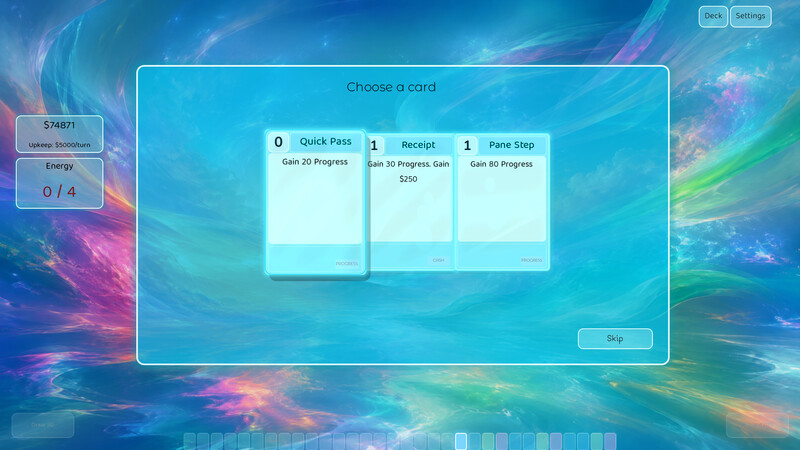
Released on Steam in 2026, with five unlockable decks and ten ascension tiers. The thing I'd change first is how the Glass placement rules are taught: right now most players learn them by building a queue that breaks, which is a fair teacher but an expensive one in a run-based game.